Ever watched a cheetah sprinting across the savannah and thought, "How on earth does it go so fast?"
Well, it's not just the cheetah's grace or strength—it's a complex combination of factors that make it the fastest land animal on the planet.
There's more to this feline than just speed. Let's explore the fascinating world of cheetahs and uncover how they've become the masters of velocity.
The Anatomy of Speed: What Makes a Cheetah So Fast?
Cheetahs are built for speed. Everything about them, from their flexible spine to their oversized nasal passages, plays a role in reaching extraordinary speeds.
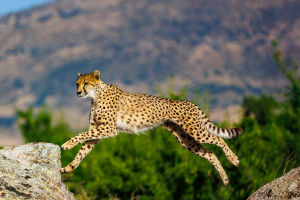
Streamlined Body: Unlike other big cats, cheetahs have a long, slender body designed to cut through the air with minimal resistance. Their lightweight frame reduces drag, helping them reach speeds up to 70 mph (113 km/h) in short bursts. The combination of a small, aerodynamic head and a long, muscular neck allows the cheetah to maintain a low profile as it runs, reducing air resistance.
Flexible Spine: A cheetah's spine is extremely flexible, like a spring. When sprinting, this flexibility allows them to stretch their body out and increase their stride length. This contributes significantly to their running ability, especially at top speed.
Powerful Legs: The cheetah's legs are long, with powerful muscles that help it propel forward in explosive bursts. The back legs are especially strong, allowing the cheetah to push off the ground with immense power, helping them reach peak speed quickly.
The Role of the Tail: Balance and Control
When cheetahs sprint, they rely on their long, muscular tail to maintain balance and steer. The tail acts like a rudder, helping them make sharp turns while maintaining their incredible speed. This is particularly useful when they're chasing prey, as they often have to make quick turns to stay on track.
The tail's flexibility also helps stabilize the cheetah's body during the running process. As the cheetah twists and turns, the tail counterbalances the forces, ensuring the animal doesn't lose control or veer off course. Without this feature, high-speed chases would be difficult, if not impossible.
Hunting Strategy: Using Speed to Outrun Prey
Cheetahs do not rely on endurance to catch their prey. Instead, they rely on speed and stealth. Here's how they hunt:
Approach Stealthily: Cheetahs will often sneak up on their prey as much as possible. Using the cover of grass or terrain, they get within 100 meters of their target before initiating the sprint. This ensures that they can get as close as possible without being noticed.
Explosive Sprint: Once in position, the cheetah launches into a full sprint. For the next 20 to 30 seconds, it reaches its top speed, sometimes exceeding 60 mph. It's a high-risk, high-reward moment—cheetahs can't maintain this speed for long, so the sprint needs to end with success.
The Capture: Cheetahs usually catch their prey with a combination of speed and accuracy. They don't need to outrun their prey for long—just enough to get close and pounce. Once they catch up, they bring the prey down by grabbing it with their claws and delivering a suffocating bite.
While their top speed is impressive, cheetahs rely more on strategy than raw power. They're not equipped for endurance, and if their chase goes too long, they'll tire quickly, making it a race against time.
Challenges of Survival: Speed Isn't Everything
Despite their incredible running abilities, cheetahs face significant challenges in the wild. Here are a few reasons why speed alone doesn't guarantee success:
Competition from Other Predators: Cheetahs are faster than lions and leopards, but when it comes to taking down large prey, they often find themselves outmatched by stronger, more powerful predators. Cheetahs don't have the same muscular strength to bring down larger animals like buffalo, so they typically target smaller, more manageable prey like gazelles.
Vulnerability After the Chase: After a sprint, cheetahs are often left panting and vulnerable. Their bodies heat up quickly from the intense effort, and they need to rest and cool down before they can eat their prey. During this recovery time, they are at risk of losing their meal to other predators, such as lions or hyenas, who may attempt to steal the catch.
Genetic Bottleneck: The cheetah population has suffered from genetic bottlenecks, meaning there is limited genetic diversity among the remaining animals. This makes them more susceptible to diseases and reduces their overall survival rate in the wild.
Conservation Efforts: Protecting the Speedsters
The cheetah's incredible speed is a marvel of nature, but this species is at risk. Conservation efforts are crucial to ensure that these majestic cats continue to roam the savannas of Africa.
Protecting Habitat: Cheetahs need large, open spaces to roam and hunt. Protecting their natural habitats from human encroachment is a major focus of many conservation programs.
Reducing Human-Wildlife Conflict: Farmers and ranchers sometimes see cheetahs as threats to their livestock. Educating communities about cheetahs' role in the ecosystem and implementing non-lethal methods of predator control can help reduce conflict.
Captive Breeding Programs: Some zoos and wildlife organizations have started captive breeding programs to help boost the cheetah population. While it's important for cheetahs to remain in the wild, these programs can provide valuable genetic diversity and a safety net for the species.
In the world of wildlife, the cheetah stands as a symbol of unmatched speed and agility. But it's clear that speed is only one part of the equation. From their incredible physical adaptations to their hunting strategies, cheetahs have perfected the art of running.
However, like all animals, they face challenges that speed alone can't overcome. As we continue to protect these magnificent creatures, it's essential to remember that their future depends not just on speed but on our commitment to preserving their way of life.