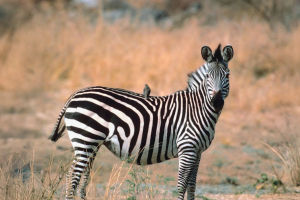
Let’s take a journey across the vast African Savannah, where zebras catch our eyes with their striking black-and-white stripes. But these stripes aren’t just a fashion statement—they’re a finely tuned survival toolkit.
Every stripe hides secrets of camouflage, temperature control, and protection that help zebras survive and thrive in the wild. By exploring how these patterns work, we can better appreciate the genius of nature’s design.
Camouflage That Confuses
In the animal kingdom, blending in is a key survival strategy. Surprisingly, zebras’ bold black-and-white stripes act as one of the most effective camouflage tools in the savannah. In the open grasslands and scattered trees, sunlight creates a mix of shadows and bright spots. When zebras stand or run together, their stripes blur into a dynamic pattern, confusing predators like lions and hyenas.
These predators rely heavily on sight to single out prey, but the moving stripes make it hard to focus on one individual. This visual trick, often called “motion camouflage,” dramatically increases zebras’ chances of escaping danger.
Keeping Cool Under the Sun
Zebra stripes also play an important role in temperature regulation. Black stripes absorb heat, while white stripes reflect it. This alternating pattern may create tiny micro air currents along their skin, helping zebras manage their body temperature even under the blazing African sun. Essentially, their coats act like a natural cooling system, keeping zebras comfortable while they graze or migrate across the plains.
Battling Pesky Bugs
Beyond camouflage and heat control, stripes also serve as a natural insect repellent. Studies have found that biting flies and other blood-sucking insects are less likely to land on striped surfaces, reducing the risk of disease transmission. This protection allows zebras to feed, rest, and travel without constant irritation from bugs.
Unique Identity Tags
Every zebra has a stripe pattern that is completely unique, much like a human fingerprint. Mothers can instantly recognize their foals, while herd members can identify each other at a glance. This ability is crucial for maintaining social bonds, coordinating group movements, and strengthening herd cohesion. The stripes function like natural ID cards, helping zebras stay connected and safe within the herd. It’s amazing to see how a simple pattern supports complex social structures.
More Than Just Looks
From hiding from predators to regulating body temperature and deterring insects, zebra stripes multitask in ways that go far beyond appearance. They are essential for survival, health, and social life. Each stripe tells a story of evolution, adaptation, and natural ingenuity. By studying these patterns, we can gain a deeper appreciation for how life adapts to challenges, using simple yet clever solutions. Nature truly turns survival into an art form.
Nature’s Clever Design
Watching a herd of zebras under the sun, we’re not just seeing a beautiful scene—we’re witnessing a complex survival system in action. Their stripes demonstrate how nature combines art, science, and strategy. Every line and pattern has a purpose, from confusing predators to keeping cool and preventing insect bites. For us, understanding these functions reveals the intelligence embedded in evolution. Each stripe is a small but powerful lesson in resilience, adaptation, and the brilliance of life on Earth.
Lykkers! Next time you watch zebras on the plains or in a wildlife documentary, remember that those black-and-white patterns are far more than decoration. They are a masterclass in survival, designed over thousands of years to outsmart predators, regulate temperature, protect against pests, and maintain social bonds. Zebras teach us that even the simplest patterns in nature can carry incredible wisdom and function.