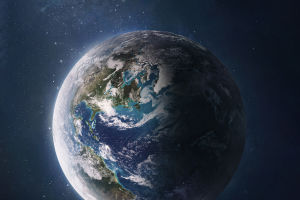
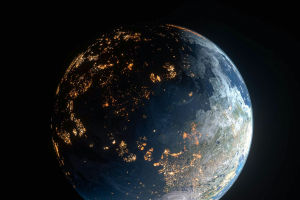
Let’s embark on a journey to understand why, in the vast universe with countless planets, Earth is uniquely alive.
It's amazing that amid the cold emptiness of space, there exists a vibrant oasis teeming with life. Truly, it is a miracle.
The Three Keys to Life
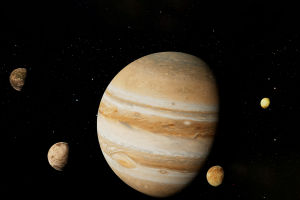
For any planet to host life, it faces extremely tough conditions. Just on its own, a planet must meet three crucial criteria. First, it must have the right mass—not too small, not too large. Too little mass and the planet can’t hold an atmosphere; too much, and it becomes a gas giant. Either way, life cannot survive.
Second, the planet must be positioned in a “Goldilocks” zone around its star—neither too close nor too far. Too close, and water evaporates; too far, and water freezes. Earth, just perfectly placed, allows liquid water to exist.
Third, the planet needs an internal balance—not too quiet, not too violent. If internal activity is low, there’s no geological motion, no atmosphere, and no magnetic field. If too high, constant quakes and eruptions make life impossible. Earth hits the sweet spot for billions of years.
The Anthropic Principle
Here’s a mind-bending idea: why did Earth get so lucky? Australian physicist Brandon Carter proposed the anthropic principle, which basically says that any observed universe must allow observers. In other words, if Earth hadn’t met these conditions, we wouldn’t be here to wonder about it. So the mere fact we can ask these questions is the answer itself!
Oceans: Life’s Stage
Earth’s oceans are unmatched in the universe. They cover 75% of the surface, containing about 97% of Earth's water—roughly 1.335 billion cubic kilometers of salty seas. Water absorbs long wavelengths like red and orange but reflects shorter blue and green ones, giving the oceans their beautiful color.
Water is essential for life. Even oxygen-less organisms rely on it, and the earliest lifeforms evolved in oceans. Water is the perfect solvent for organic molecules, allowing them to interact and form complex life structures. Photosynthesis, respiration, and countless metabolic activities depend on it. Without oceans, life simply couldn’t exist.
Atmosphere: Water’s Guardian
But water alone isn’t enough. Water can evaporate, as anyone observing a puddle can see. Earth’s atmosphere prevents our oceans from disappearing into space. Its 5.15×10¹⁸ kg of gases—mostly nitrogen (78%) and oxygen (21%)—trap water vapor, condensing it back into rain.
The atmosphere also warms our planet. Greenhouse gases like carbon dioxide and water vapor trap heat radiation from the Earth, raising the average temperature by about 32°C. Additionally, the ozone layer shields us from 97% of harmful ultraviolet rays. Without these protections, life would struggle to survive.
Magnetic Field: The Invisible Shield
Even an atmosphere isn’t safe without a magnetic field. Earth’s magnetic field stretches from its core into space, deflecting harmful solar winds composed of charged hydrogen and helium particles. These winds could take away our atmosphere if not for this invisible shield.
The magnetic field redirects charged particles toward the poles, creating the spectacular auroras. More importantly, it preserves our atmosphere, keeping Earth habitable. Without this magnetic protection, our oceans and air would eventually be lost to space.
Earth: A Living Miracle
To sum up, Earth’s suitable mass, perfect distance from the Sun, and balanced internal activity have allowed oceans, atmosphere, and a magnetic field to coexist. Oceans provide the stage for life, the atmosphere preserves water, and the magnetic field shields the air from solar wind. These three elements together make Earth a true oasis of life.
Final Thoughts
Earth is a miracle, and intelligent life adds another layer of wonder. Each of us is part of this extraordinary cosmic story. Lykkers, take a moment to marvel: the very fact we exist to ask questions about Earth is proof of its perfection. Let’s treasure this unique planet and the life it harbors!
What Makes Earth Suitable For Life
Video by Five Things