Meteor showers don't care about hype. They follow orbits, not headlines.
Every year, Earth swings through streams of debris left behind by comets, and small particles slam into the atmosphere at tens of thousands of miles per hour, heating up and vaporizing in brilliant streaks.
The whole display is free, requires zero equipment, and yet most people still manage to miss it.
Why Showers Happen at All
When a comet passes close to the Sun, it loses material — ice and rock vaporize off the surface and scatter along the comet's orbital path. Over time, these debris streams spread out along the comet's orbit, forming wide rivers of particles in space.
Earth's own orbit intersects several of these streams at the same points every year. When that happens, Earth sweeps through the debris, and particles that enter the atmosphere create the streaks we call meteors. The Perseids in August come from the debris of Comet Swift-Tuttle; the Leonids in November track back to Comet Tempel-Tuttle.
The Geminids are a notable exception — their parent body is an asteroid called Phaethon, not a comet. Each shower is named after the constellation where the meteors appear to originate — the radiant point. Track any meteor backward across the sky and the trail points back to that same spot.
The Peak Timing Matters
Meteor showers happen over several days as Earth moves through the debris stream, but there's usually a specific night — sometimes just a few hours — when Earth is plowing through the densest part. That's the peak. Tables for major showers list what's called the Zenithal Hourly Rate (ZHR): the number of meteors you'd see per hour under perfect conditions with the radiant directly overhead.
Real viewing almost never matches the ZHR. Light pollution, moonlight, and the radiant's position in the sky all pull the numbers down considerably. But knowing the peak gives you the right night to be outside.
The Biggest Killers: Light and the Moon
Nothing kills a meteor shower quite like city lights or a bright moon. A half-full or brighter moon sitting anywhere near the sky will wash out the fainter meteors — and most meteors are faint. If a moon is unavoidable, position something solid between you and it: a barn, a tree, a vehicle.
Watch the darker portion of the sky. For location, dark rural areas beat suburban backyards completely. Fields, country roads, campsites with an open sky — anywhere away from the glow of streetlights. The wider your field of view, the better your chances.
Technique Makes a Difference
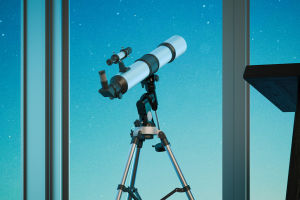
Telescopes and binoculars are the wrong tools here. Meteors flash across wide swaths of sky in under a second; anything with a narrow field of view misses them entirely. All you need is your eyes, but they need time. It takes about 20 minutes for the human eye to fully adapt to darkness — until then, you're effectively still seeing in the half-dark. Lie flat on your back so you can see as much sky as possible without straining your neck.
Look generally toward but not directly at the radiant point; meteors near the radiant appear as short streaks, while those farther away leave longer, more dramatic trails. Give yourself at least an hour of watching time, since meteors come in spurts and lulls.
After Midnight Is Almost Always Better
For most showers, the hours after midnight — especially the hours before dawn — tend to produce more meteors. The geometry of Earth's rotation brings your location directly into the path of incoming particles after midnight, like a car windshield facing into rain.
Before midnight, you're catching particles that overtook Earth from behind, which requires a higher relative speed and produces fewer visible events. The Geminids are a happy exception — they're active all night — but for most showers, set the alarm and go out late.