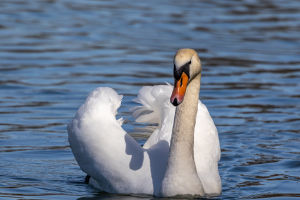
Dear Lykkers, today we step into a peaceful lakeside world where calm waters reflect soft light and elegant birds glide quietly across the surface.
In this space, we explore the life journey of mute swans, from the earliest beginnings to family building and long seasonal journeys.
Their story is not loud or dramatic, but it is filled with care, patience, and steady connection. Let’s walk together through their world and observe how each stage of life unfolds with meaning and balance.
The Beginning of Life on Quiet Waters
In early warm seasons, a pair of swans carefully prepare a nest near shallow water surrounded by reeds and soft grass. The chosen spot is hidden enough to offer comfort, yet close to food sources in the lake. Inside the nest, smooth eggs rest under gentle warmth provided by the parent bird.
After about five weeks, small chicks begin to break through their shells. Their arrival is soft and fragile, yet full of energy and curiosity. Covered in soft down, they stay close to the parents from the very first moment. The water nearby becomes their first classroom, and every ripple introduces them to a new experience.
This stage marks the start of a journey that depends heavily on patience, attention, and continuous care from both parents.
Growing Through Daily Learning
As days pass, the young swans slowly gain strength. Their bodies grow larger, and their soft grey tones gradually shift toward lighter shades. The lake becomes their training ground, where they learn how to move smoothly through water and respond to changing surroundings.
We can observe how every small action matters during this stage. Simple movements like following a parent, searching for small aquatic plants, or practicing balance in water all contribute to their development.
Challenges naturally appear during growth, such as learning coordination in water currents or adjusting to different weather conditions. Yet steady guidance from their parents helps them gain confidence step by step. Each day builds experience, and each experience strengthens their independence.
The Formation of a Lifelong Pair
When swans reach maturity, they begin to form strong pair connections. During this period, gentle movements become a form of communication. One swan may display smooth neck motions or soft vocal sounds, while the other responds with calm interaction.
When a pair forms, their bond becomes deeply stable. They often remain together across seasons, sharing responsibilities in nest building and chick care. This connection is built on trust, time, and shared experience rather than sudden change.
Their pairing is not just about companionship; it becomes a working partnership that supports every stage of life ahead.
Building a Shared Home and Raising Young
Once paired, the swans choose a safe location near the water to construct their nest. They gather reeds, grass, and plant materials, carefully arranging them into a stable structure. This nest becomes the center of their family life.
Egg incubation is shared, with each swan taking turns to ensure warmth and protection. After hatching, both parents remain close, guiding their young through early swimming lessons and teaching them how to find food in shallow water areas.
We often notice how coordinated their actions are. One parent may lead while the other stays nearby, forming a natural protective rhythm. This teamwork allows the young swans to grow in a stable and supportive environment.
Seasonal Journeys and Group Coordination
Outside breeding periods, swans may travel across lakes and rivers in search of suitable living conditions. These movements are not rushed but carefully timed according to environmental changes.
During travel, family groups often stay together, maintaining close formation on water or in flight. This coordination helps them conserve energy and stay connected as a unit.
We can see how communication plays a key role here. Subtle movements and positioning help the group stay aligned, even over long distances. These journeys reflect adaptability and awareness of surroundings.
A Life Filled With Balance and Meaning
The life of mute swans reflects steady cycles of care, learning, and connection. From the first moment of life on the nest to the shared responsibility of raising young and traveling across wide waters, every stage carries purpose.
For us, their story offers a simple reminder: relationships grow through patience, cooperation, and shared effort. Observing their world encourages us to appreciate calm moments in nature and value the quiet strength found in consistency.
Closing Reflection for Lykkers
Lykkers, as we reach the end of this journey, we are left with a gentle image of swans moving across still waters, connected and calm. Their life shows how care and balance shape each stage of growth.
What part of their journey do you find most meaningful—the early beginnings, the family teamwork, or their graceful movement across lakes? Share your thoughts and let’s continue exploring more natural stories together.
Nature: Mute swans
Video by CBS Sunday Morning